Case
Government
Government
Public services
Industry:
Semi-Government / Water Management
Services:
UX Product Design & Engineering · Product Design Development · Accessibility · Usability
.. technical
✓ Lean UX expertise · ✓ UX/UI Engineering · ✓ Search engine optimization · ✓ Image optimization · ✓ Prototyping · ✓ Accessibility WCAG 2.2
Project Overview
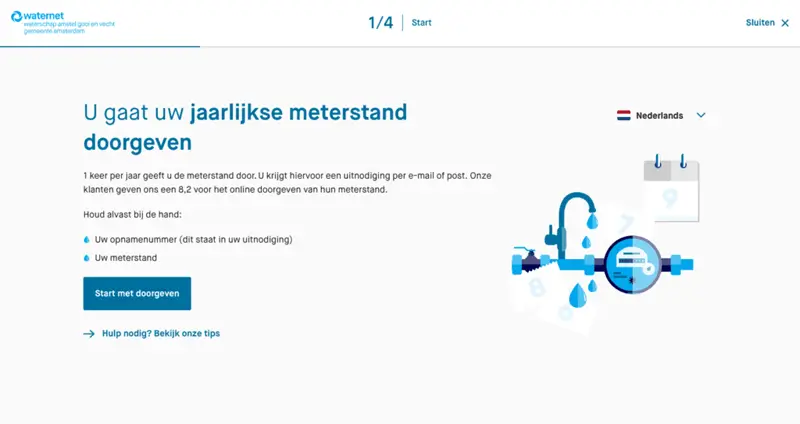
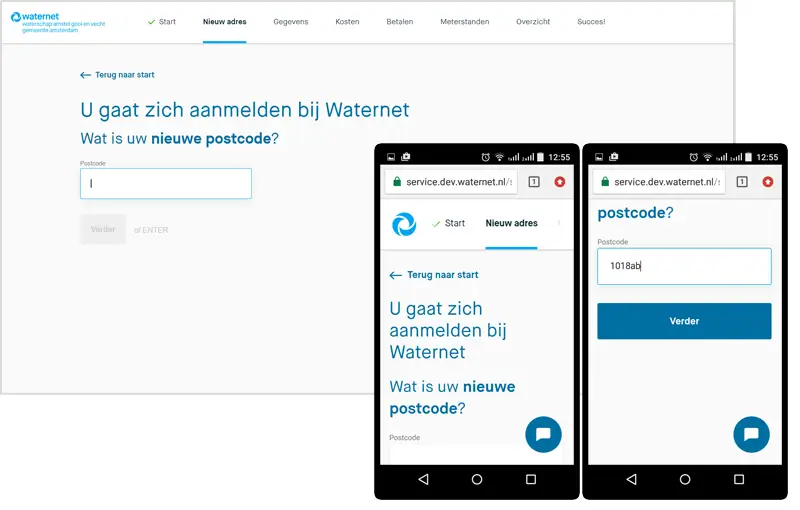
Waternet, Amsterdam's public water authority, serves over a million residents and businesses. Its website had solid core features, but common tasks reporting leaks, checking water quality, paying bills were hidden behind unclear labels, complex forms, and cluttered pages.
On mobile, the experience was frustrating, with tiny touch targets and difficult workflows. Users expected the clarity and speed of a modern service, not bureaucracy.
The challenge was to improve UX measurably without a full rebuild, while meeting Dutch government accessibility standards.
Objectives
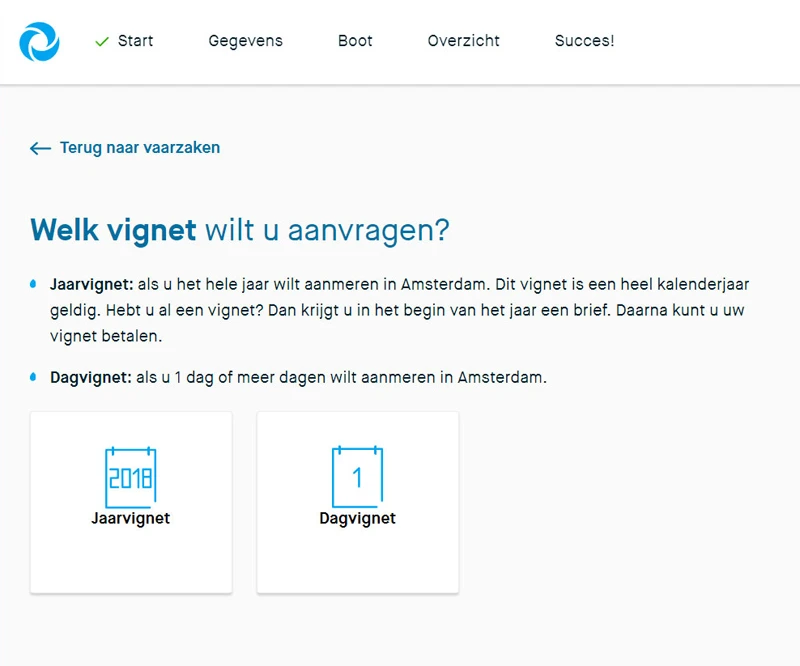
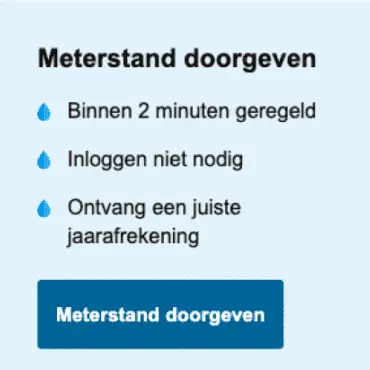
- Surgical, high-impact changes means no visual overhaul. Instead, clarified navigation labels, re-grouped form fields, and surfaced the top 4 citizen tasks on the homepage,
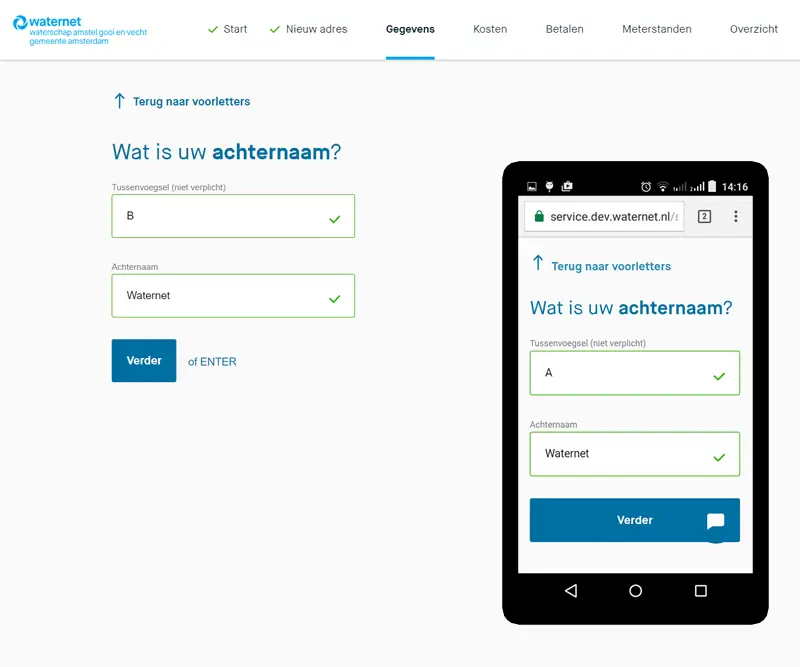
- Mobile-first refinements for enlarged touch targets, optimised inputs for on-screen keyboards, and restructured critical service information for quick scanning on small screens,
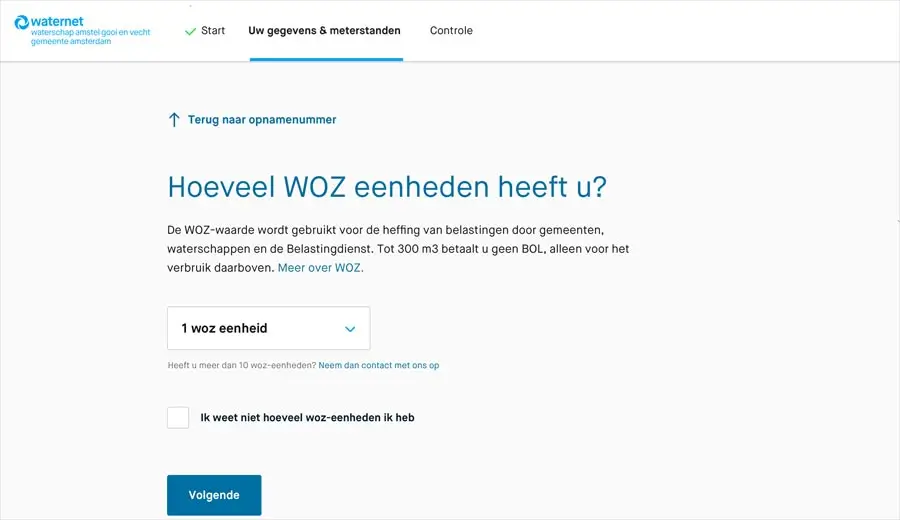
- Reduced cognitive load means simplified multi-step forms so reporting a leak or finding water hardness data takes fewer clicks and less mental effort.

Technical & Accessibility
- WCAG compliance as a core requirement for improved focus states, colour contrast, and semantic markup for screen-reader users, making forms and service updates accessible to all citizens,
- Iterative front-end implementation: each improvement was tested against the core tasks identified during discovery, ensuring measurable speed and clarity gains without side effects,
- Alignment with existing tech stack: all changes stayed within Waternet's infrastructure, zero risk of a platform rebuild.
Process & Stakeholders
Continuous review with Waternet's internal team kept every tweak aligned with communication standards and data-privacy regulations,
Short feedback cycles: UX refinements were implemented, reviewed, and validated directly in the live environment, cutting project overhead and speeding delivery.
Expected Results
- ✓ - The streamlined interface reduced task-completion time for thousands of daily users,
- ✓ - Navigation flows became intuitive, mobile usability became usable, and accessibility barriers were removed,
- ✓ - Waternet's digital services now feel as reliable and clear as the water it delivers - without a single line of wasted code or a costly redesign.
Conclusion
Incremental changes can transform public trust: even small UX improvements, when they hit the most critical tasks, have an outsized impact on citizen satisfaction.
Usability is a public service metric: for a utility, the ease of online interactions directly correlates with trust in the institution.
Mobile is the front door for a smooth on-the-go experience is no longer a luxury; it's where real-world issues get resolved.
---
See other selected projects from the Government archive
Start a Tailored Project -
me!
Archive
Start-up's
Organisation
Ministry
Infrastructure & Water Management
Organisation
Ministry
Interior & Kingdom Relations
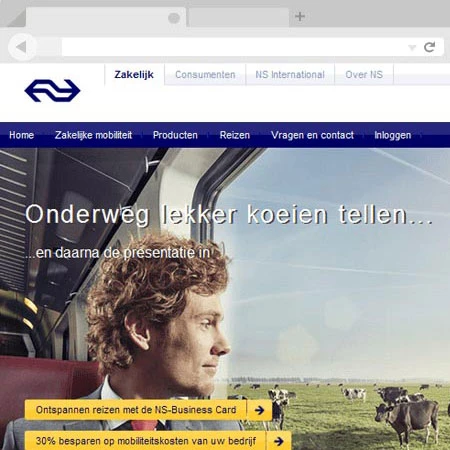
Organisation
National Railway
Nederlandse Spoorwegen NS
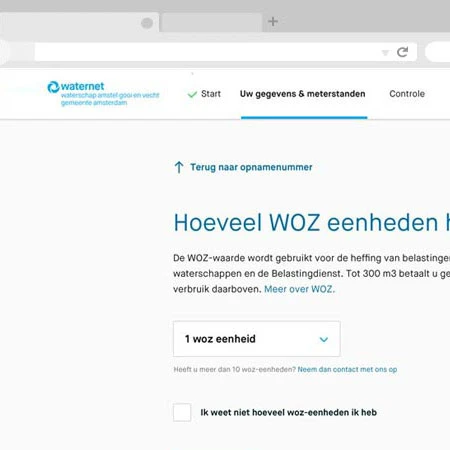
Organisatiom
Waternet
Amsterdam
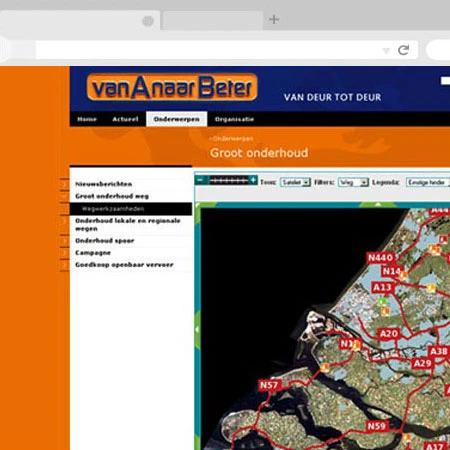
Organisation
Van A Naar Beter
GeoSpacial
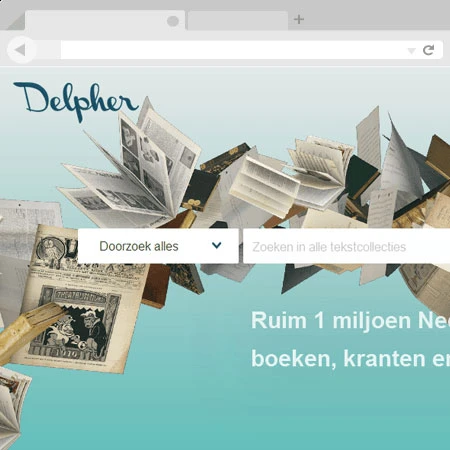
Organisation
National Library
Delpher